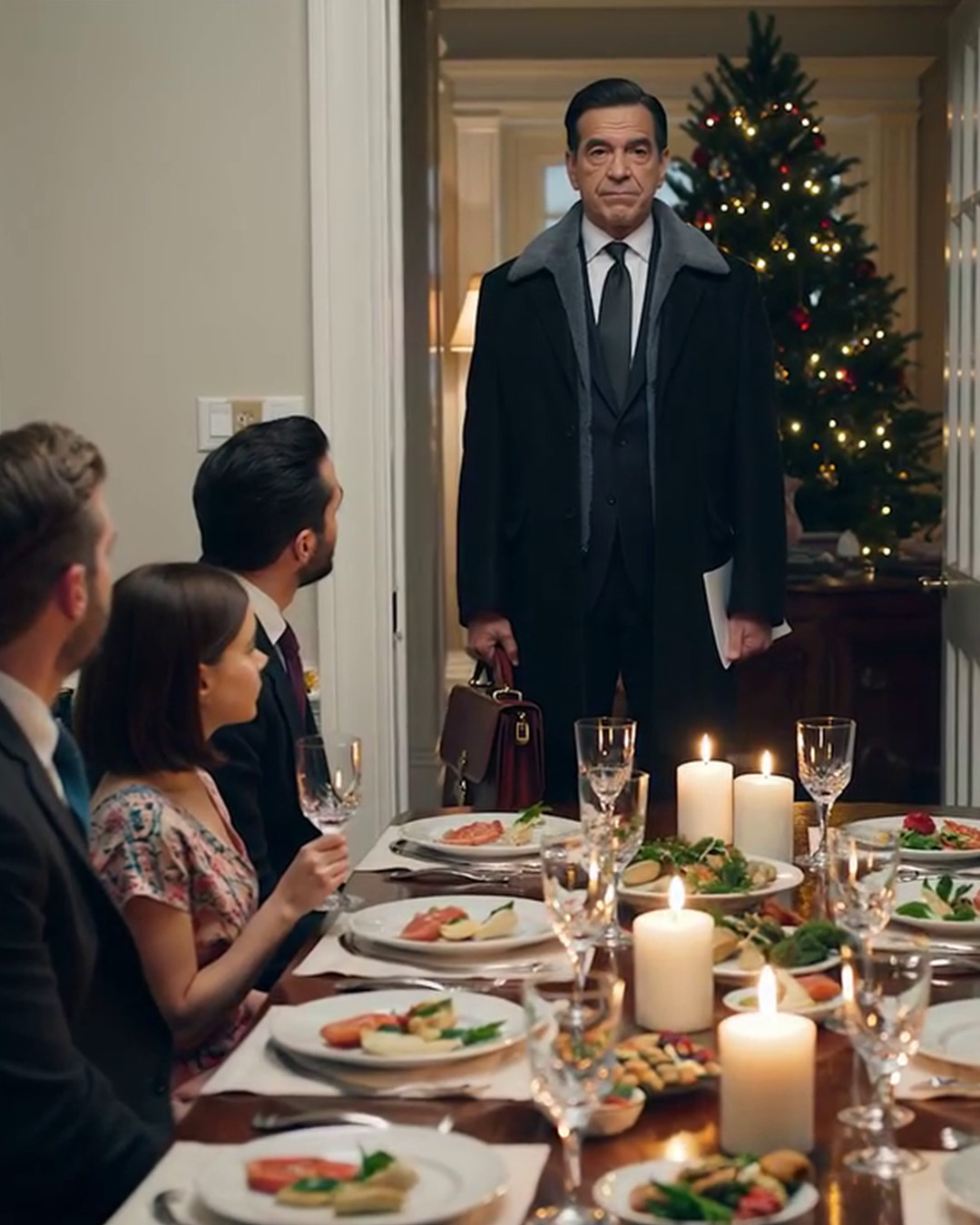
“Dennis, this is completely inappropriate. You need to leave immediately.”
“Actually,” I said, opening my briefcase and pulling out the first stack of papers, “I think your guests deserve to know who really paid for this dinner, this house, and this lifestyle you’ve been showing off.”
A woman I didn’t recognize—probably one of Catherine’s charity friends—leaned forward with curiosity.
“What is he talking about, Isabella?”
“He’s having some kind of episode,” Isabella said quickly. “Michael, call someone.”
But I was already moving around the table, placing a packet of documents in front of each guest.
“Here are the bank records,” I said conversationally. “Five years of financial support. $168,000 in mortgage payments alone, plus the down payment, renovations, furniture, appliances—everything you see around you.”
The room went silent except for the rustling of papers as twelve people began examining the evidence.
I watched their faces change as they absorbed the numbers, the dates, the undeniable proof of my generosity and their deception.
“This is…” one man started, then stopped, staring at a bank statement.
“Outrageous,” finished the woman across from him. “Isabella, why didn’t you tell us any of this?”
Isabella’s perfect composure was cracking.
“It’s more complicated than it looks. Dennis volunteered to help us. We never asked.”
“Actually,” I interrupted, pulling out the newspaper article. “Let’s talk about what you did ask for, and what you told the media about me.”
The temperature in the room seemed to drop ten degrees.
I placed copies of the newspaper article on the table, watching as the dinner guests recognized my photo from the unflattering story that had run three days earlier.
“Now,” I said, my voice carrying clearly through the sudden silence, “let’s talk about the real manipulators in this family.”
Cody’s face had gone from red to ashen.
Catherine sat rigid in her chair, her wine glass forgotten in her hand.
“Mr. Jenkins here used his banking connections to plant this story,” I continued, tapping the newspaper. “Notice how I’m portrayed as unstable and dangerous, abandoning poor elderly people in freezing weather.”
A gray‑haired man in an expensive sweater looked up from the article.
“Cody, what is this about?”
“The weather was fifty‑two degrees and sunny,” I said before Cody could answer. “And they weren’t stranded tourists. They were Isabella’s parents coming to the Christmas dinner I’d been banned from attending because I wasn’t good enough for their company.”
Catherine finally found her voice.
“That’s not—we never said—”
“You never said what, Catherine?” I pulled out my phone where I’d screenshotted several of Isabella’s social media posts. “That I was too low‑class for your parents? That my Mexican food and working‑class conversation would embarrass you in front of your educated friends?”
The woman I’d identified as one of Catherine’s charity friends shifted uncomfortably.
“Catherine, surely you didn’t—”
“He’s twisting everything,” Cody blustered, but his voice lacked conviction. “This man has serious mental health issues. The stress of aging, financial problems—”
“Financial problems?” I almost laughed. “Mr. Jenkins, I’ve been supporting your daughter and son‑in‑law to the tune of nearly $3,000 a month for five years. The only financial problems here are the ones you’re about to have.”
I turned to address the entire table.
“These people have taken $200,000 from me while calling me names behind my back. They’ve manipulated my son against me, banned me from family gatherings, and when I finally stood up for myself, they tried to destroy my reputation in the newspaper.”
Michael spoke for the first time, his voice barely above a whisper.
“Dad, I didn’t know about the newspaper.”
“Your wife knew,” I said quietly. “And her parents orchestrated it. They turned me into a villain for refusing to be their personal ATM and chauffeur.”
The social dynamic in the room was shifting like tectonic plates.
I could see it in the guests’ faces—the gradual realization that everything they’d been told about tonight’s generous hosts was built on lies.
“This is unconscionable,” said an elderly woman in pearls, staring at the bank statements. “Cody, how could you let your daughter take advantage of this man’s generosity, then attack him publicly when he stopped enabling it?”
Cody’s carefully maintained facade was crumbling.
“You don’t understand the full situation—” he began.
“I understand perfectly,” the woman interrupted. “This man has been supporting your family financially while you treated him like hired help, and when he finally said no, you tried to ruin his reputation.”
Catherine’s voice came out strangled.
“He abandoned us at the airport—”
“After you told me I wasn’t welcome at Christmas dinner because my presence would be ‘inappropriate’ for your parents,” I said calmly. “After five years of paying their bills while you look down on me for my ethnicity and education level.”
The silence was deafening.
Twelve people staring at Cody and Catherine with expressions ranging from disgust to embarrassment for having associated with them.
Isabella made one last desperate attempt to control the narrative.
“Everyone, please. This is a family matter that’s gotten out of hand.”
“No,” I said firmly. “This stopped being a family matter when you made it public. When you used the newspaper to attack my character. When you decided my reputation was acceptable collateral damage for your pride.”
I looked around the table at faces I didn’t recognize but who now knew exactly who I was.
“I wanted you all to know the truth before you read about Dennis Flores in the paper again,” I said. “Because you will read about me again. But next time, it’ll be the real story.”
I closed my briefcase and straightened my tie.
“Enjoy the rest of your dinner,” I said. “It’s the last one I’ll be paying for.”
As I walked toward the door, I could hear the eruption beginning behind me—voices raised in accusation, questions demanding answers, the sound of a carefully constructed social facade falling apart.
It was the most beautiful Christmas music I’d ever heard.
The letter arrived on a Tuesday morning in March, delivered by certified mail with the weight of legal consequences behind every word.
I signed for it at my front door, noting how the spring air smelled of new growth and possibility instead of the winter desperation that had marked those dark December days.
NOTICE OF DEFAULT, the envelope read.
FINAL DEMAND FOR PAYMENT.
Inside, three months of missed mortgage payments had caught up with Michael and Isabella like a tsunami of reality.
$8,400 in arrears.
Fourteen days to bring the account current or face foreclosure proceedings on the house I’d helped them buy.
I set the letter aside and returned to my coffee, reading it the way you’d read news about distant weather.
Interesting, but not your problem anymore.
My phone had been ringing for weeks with increasingly desperate calls—Isabella’s number blocked after the first hysterical voicemail; Cody and Catherine, whose social standing in Spokane had evaporated like morning mist after their Christmas dinner humiliation; even Michael, whose calls I’d been ignoring out of a mixture of anger and curiosity about how long it would take him to swallow his pride.
The answer, apparently, was ninety‑seven days.
He knocked on my door that Thursday evening, no longer the confident man who’d excluded me from Christmas dinner, but someone who looked like he’d aged a decade in three months.
Dark circles under his eyes, his expensive suit wrinkled, the smell of desperation clinging to him like cheap cologne.
“Dad,” he said when I opened the door. “We need to talk.”
I stepped aside to let him in, noting how he looked around my house like he was seeing it for the first time—the new furniture I’d bought with my first mortgage‑free paycheck, the fresh paint on walls that hadn’t been updated in eight years because every spare dollar had gone to his lifestyle, the repairs I’d finally been able to afford now that I wasn’t subsidizing someone else’s American dream.
“Nice place,” he said quietly.
“It’s what happens when you spend money on yourself instead of people who don’t appreciate it,” I replied, settling into my new recliner. “Coffee?”
Pokręcił głową, siadając na krawędzi mojej kanapy, jakby bał się wygodnie się ułożyć.
"Tato, musisz wiedzieć, jak bardzo mi przykro z powodu wszystkiego," powiedział. "Kolacja wigilijna, artykuł w gazecie, sposób, w jaki Isabella... sposób, w jaki cię traktowaliśmy."
"No dalej," powiedziałem.
"Nie wiedziałem, że Cody podsiedził tę historię. Przysięgam, że nie." Przeczesał włosy rękami. "Kiedy się dowiedziałem... Jezu, tato. To, co mówili o tobie za twoimi plecami, jak mówili o naszej rodzinie, o pamięci mamy."
Zacisnęłam szczękę na wspomnienie Marii, ale zachowałam równy ton.
"A co dokładnie powiedzieli o twojej matce?"
"Że zna swoje miejsce lepiej niż ty swoje," powiedział, nie patrząc mi w oczy. "Że rozumiała granice."
Przełknął ślinę.
"Powinienem był cię bronić. Powinienem był się im przeciwstawić lata temu."
"Tak," powiedziałem po prostu. "Powinnaś była."
Siedzieliśmy w ciszy przez dłuższą chwilę, ciężar pięciu lat błędów wypełniał przestrzeń między nami.
Na zewnątrz słyszałem, jak sąsiad kosi trawnik — to normalne dźwięki zwykłego czwartkowego wieczoru w zwykłej okolicy, gdzie synowie nie wykluczają ojców z kolacji bożonarodzeniowej.
"Dom jest w trakcie egzekucji," powiedział w końcu Michael.
"Wiem."
"Nie możemy dokonywać płatności bez—" Przerwał, jakby zdając sobie sprawę, jak to brzmi.
"Bez mojej pomocy," dokończyłem. "Bez pieniędzy, które wysyłałem co miesiąc, podczas gdy ty pozwalasz, by rodzina twojej żony traktowała mnie jak śmieci."
Skinął żałośnie głową.
"Wiem, jak to wygląda, tato."
Pochyliłem się do przodu, upewniając się, że patrzy na mnie.
"Wiesz, ile pieniędzy wysłałem ci przez pięć lat?" Zapytałem.
Znów skinął głową.
"Isabella obliczyła to po świętach," powiedział. "Raty hipoteczne, wkład własny, wszystko inne. Ponad 200 000 dolarów."
"237 468 dolarów," poprawiłem się. "Znam dokładną kwotę, bo w końcu zrobiłem coś, co powinienem był zrobić lata temu — zliczyłem to."
Jego twarz się zmarszczyła.
"Tato, bardzo przepraszam. Nie wiem, jak to naprawić."
"Nie da się tego naprawić, synu," powiedziałem. "Te pieniądze zniknęły. Ale co ważniejsze, te lata minęły. Pięć lat, kiedy mogłem budować z tobą relację, zamiast finansować wymarzone życie twojej żony."
"Wiem," wyszeptał. "Teraz już wiem."
Spojrzał na mnie z czymś, co mogło być nadzieją.
"Ale może moglibyśmy zacząć od nowa," powiedział. "Może jest sposób, żeby—"
"Prosisz mnie, żebym wznowił raty kredytu hipotecznego?" Zapytałem.
Nadzieja zgasła w jego oczach.
"Ja... stracimy wszystko, tato," powiedział. "Dom, szacunek Isabelli do mnie, aprobata jej rodziców. Nie wiem, co zrobię."
"Sam sobie poradzisz," powiedziałem, nie nieuprzejmie. "Tak samo jak nauczyłem się żyć bez syna, który mnie szanował. Tak jak nauczyłem się spędzać Boże Narodzenie sam, podczas gdy ty świętowałeś z ludźmi, którzy uważali mnie za gorszego."
Wtedy zaczął płakać — cicho, jak człowiek, któremu skończyły się inne opcje.
"Straciłem cię, prawda?" powiedział. "Wybrałem ich zamiast ciebie, a teraz straciłem cię na zawsze."
Obserwowałem go przez dłuższą chwilę—tego człowieka, którego wychowałem, kochałem i poświęciłem, który pozwolił rodzinie żony przekonać się, że ojciec nie jest wystarczająco dobry dla ich towarzystwa.
"Michael," powiedziałam w końcu, "nie straciłeś mnie. Zdradziłeś mnie. To różnica."
Wytarł oczy grzbietem dłoni.
"Czy jest jakaś szansa, jakakolwiek szansa, byś mi wybaczyła?" zapytał.
"Wybaczyłem ci miesiące temu," powiedziałem — i mówiłem to szczerze. "Ale przebaczenie nie oznacza powrotu do dawnych czasów. To nie znaczy, że udawam, że to się nie wydarzyło, ani że zamierzam znów płacić za styl życia, który wiązał się z warunkiem, że będę wdzięczny za resztki twojej uwagi."
"To co to znaczy?" zapytał.
Wstałem i poszedłem do kominka, gdzie obok nowego zdjęcia leżało zdjęcie Marii — ja z Rosą i jej rodziną na wielkanocnej kolacji.
Pierwsze wakacje, które spędziłam z ludźmi, którzy naprawdę chcieli, żebym tam była.
"To znaczy, że jeśli chcesz ze mną relację, musisz ją zbudować od zera," powiedziałem. "To znaczy okazywać mi szacunek, zamiast wymagać, żebym na niego zasłużył. To oznacza podejmowanie decyzji na podstawie tego, co słuszne, a nie wygodne."
Odwróciłem się do niego.
"I to oznacza, że następnym razem, gdy ktoś — twoja żona, jej rodzice, ktokolwiek — spróbuje wykluczyć mnie z rodzinnych spotkań, przypomnisz sobie, kto naprawdę zachowuje się jak rodzina."
Powoli skinął głową, rozumiejąc może po raz pierwszy, że szacunek nie jest czymś, co można brać za pewnik.
"Do domu," zapytał cicho. "Nic nie możesz zrobić?"
"Dom to już nie mój problem," powiedziałem, siadając z powrotem, czując się lżejszy niż od lat. "Jesteś dorosłym mężczyzną, Michael. Rozgryź to jak dorośli mężczyźni. Znajdź pracę, która wystarczy, by pokryć rachunki. Sprzedaj dom i kup coś, na co cię stać. Przestań żyć ponad swoje możliwości i oczekiwać, że inni będą wspierać twoje wybory."
Powoli wstał, po raz pierwszy od przybycia wyprostował ramiona.
"Masz rację," powiedział. "O wszystkim."
"Wiem," powiedziałem.
He walked to the door, then turned back.
“Dad,” he said, “for what it’s worth, seeing you stand up for yourself at Christmas dinner… I was proud of you. Embarrassed and angry, but proud too.”
“Good,” I said. “Maybe there’s hope for you yet.”
After he left, I poured myself a glass of the good whiskey and stepped onto my back porch.
Wiosna nadchodziła do Spokane, drzewa zaczynały pąkować, powietrze ocieplało się z obietnicą.
Za cztery miesiące miałbym sześćdziesiąt trzy lata.
Maria nie było już od ośmiu lat.
Zmarnowałem pięć z tych lat, będąc wycieraczką dla ludzi, którzy nie doceniali poświęcenia.
Nie planowałem marnować więcej.
Mój telefon zawibrował od wiadomości od Rosy.
Kolacja w niedzielę? Dzieci chcą pokazać ci swoje szkolne projekty.
Uśmiechnąłem się i odpisałem.
Nie przegapiłbym tego.
Prawdziwa rodzina, jak się okazało, to coś, co można znaleźć u ludzi, którzy naprawdę chcieli, żebyś tam był.
Wszystko inne to tylko drogi teatr.
I miałem już dość kupowania biletów na koncerty, na których nie byłem mile widziany na scenie.
Whiskey smakowała wolnością, a przyszłość wyglądała dokładnie tak jasno, jak byłem gotów ją uczynić.